Tue Sep 01 2026 00:00:00 GMT+0000 (Coordinated Universal Time)
Helical Piers vs Push Piers: Which Is Right for Your House
Helical piers vs push piers in plain English. How each works, what they cost, which one lifts a house, and which fits your soil. Free local match.
Helical piers get screwed into the ground like a giant steel screw. Push piers get shoved into the ground using the weight of your house. Both are steel. Both go down past the bad soil until they hit something solid. Both hold up a sinking foundation. In most of the US you'll pay somewhere around $2,000 to $4,000 per pier for either one, and a full job usually lands between $8,000 and $30,000 depending on how many piers you need, how hard it is to get equipment to the spot, and what your soil is doing.
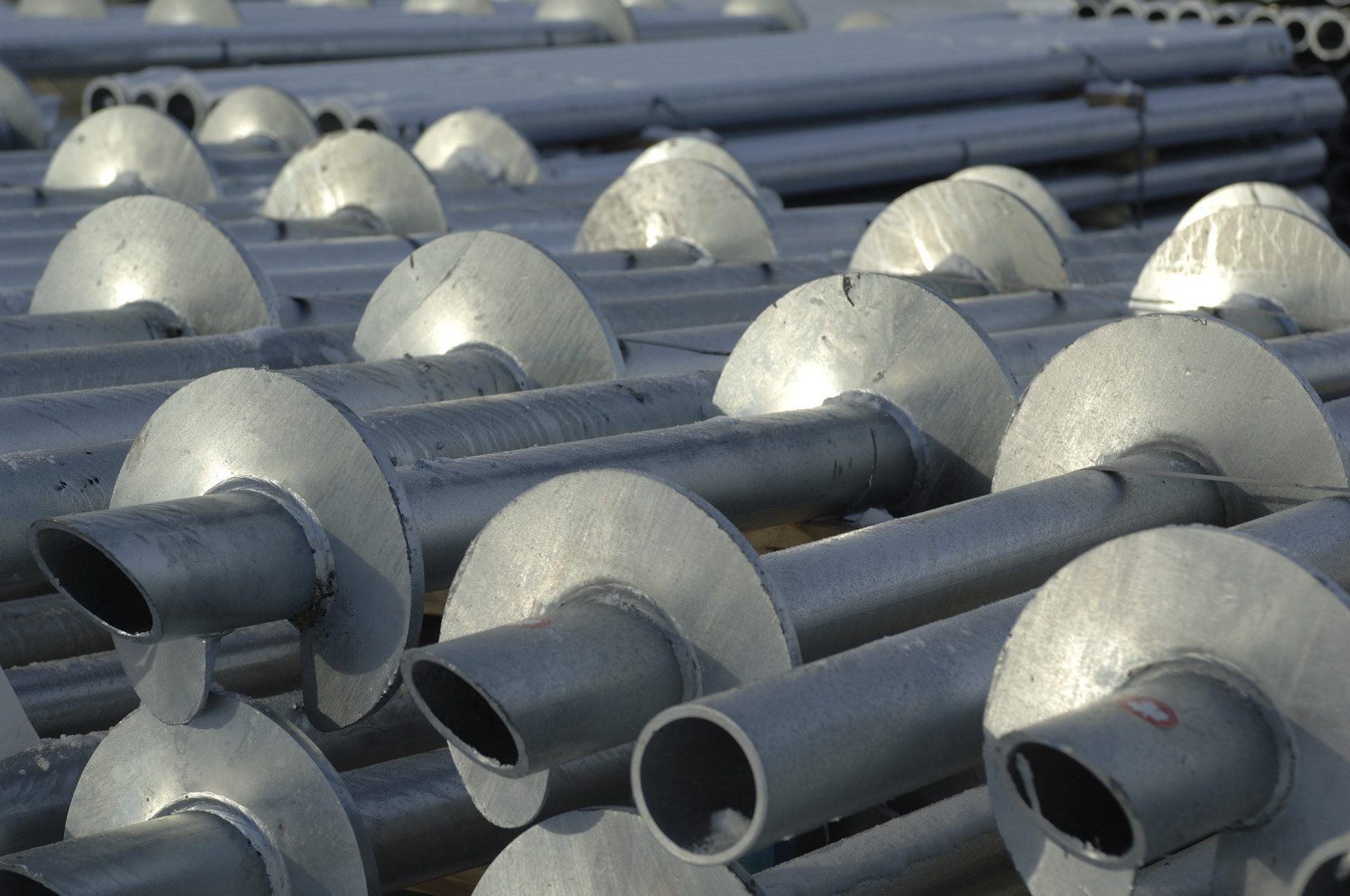
Sandra Thornton / Wikimedia Commons, CC BY-SA 4.0
The right one depends on three things: how heavy your house is, how deep the solid ground sits, and what kind of dirt is between here and there.
That's the short answer. The rest of this post is how to tell which one a contractor should be quoting you, and how to spot when they're pushing the wrong one.
Quick note on who we are. Helical Pier Installation Directory is a matching service. You tell us about your foundation problem, we introduce you to a vetted local pier contractor, and that contractor comes out and quotes the job. It's free for homeowners. You can request a foundation match any time.
How do helical piers work?
Picture a steel pipe with one or more spiral plates welded near the bottom. Those plates are called helices. A crew hooks a hydraulic drive head to the top and spins the whole thing into the ground. The helix plates pull it down, the same way a wood screw pulls itself into a 2x4.
The crew keeps adding pipe sections and keeps spinning until the torque hits a target number. That number matters. Torque and holding capacity are related, so the installer can read the gauge and know the pier is sitting in soil strong enough to carry the load. That's what people mean by "torque-verified install."
Once the pier is at depth, a steel bracket gets bolted to the footing. The house load transfers off the soft dirt and onto the pier.
A few things that make helical piers different:
- They get their strength from the helix plates biting into good soil. They don't need to hit bedrock.
- They can be installed with smaller equipment. Hand-held drive heads exist for tight spots.
- They work on light structures. A porch, a garage, a one-story wood frame house, a new deck. The pier's strength comes from the ground, so a light house is fine.
- They can be loaded right away. No waiting on concrete to cure.
More on the service side here: helical pier installation.
How do push piers work?
Push piers are also called resistance piers. Same idea, different way of getting there.
A crew bolts a bracket to your footing, then uses a hydraulic ram to push steel pipe sections straight down, one after another. The ram pushes against the bracket, and the bracket pushes against your house. Your house is the anchor. The pipe keeps going down until it hits refusal, meaning bedrock or a layer of soil so dense it just stops.
The installer watches the hydraulic pressure. When the pier can carry more than the section of house above it (with a safety margin), they lock it off and move to the next one.
What makes push piers different:
- They need a heavy house. The whole system works by pushing off the weight of the structure. A light porch or a small garage often can't provide enough resistance and the ram just lifts the building instead of driving the pier.
- They go as deep as they need to. There's no set depth. They stop when the ground stops them.
- They love bedrock. If solid rock sits 20 to 40 feet down, a push pier will find it and sit on it.
- They tend to be a good fit for heavy brick and block homes and multi-story structures.
Details on that side of the shop: push pier installation.
Helical piers vs push piers: the side-by-side
| | Helical piers | Push piers (resistance piers) | |---|---|---| | How they go in | Screwed in with a drive head | Pushed in with hydraulics | | What holds them up | Helix plates in firm soil | End bearing on bedrock or dense strata | | Needs a heavy house? | No | Yes | | How the install is checked | Torque reading | Hydraulic pressure at refusal | | Best for | Light to medium homes, decks, additions, new construction, tight access | Heavy homes, deep bedrock, big brick and block structures | | Can lift the house? | Often, yes | Often, yes | | Typical cost per pier (US) | $2,000 to $4,000 | $2,000 to $4,000 | | Equipment size | Smaller, can be hand-held | Larger hydraulic setup |
Those cost numbers come from industry cost guides (Angi/HomeGuide 2026) and match what we see come through the directory. Your contractor quotes the actual job.
Which piers are better for foundation repair?
Here's the honest answer: neither one is better across the board. Anyone who says "we only do helical" or "push piers are always superior" is telling you what their truck is loaded with.
Use this as a rough guide.
Lean helical if:
- Your house is one story, wood frame, or otherwise on the lighter side
- The problem area is a porch, garage, or addition
- Access is tight (fenced backyard, close neighbors, mature trees)
- There's no bedrock within reach, just layers of soft soil over firmer soil
- You want a torque number on paper for each pier
- It's new construction and there's no house weight to push off yet
Lean push if:
- Your house is heavy. Full brick, block, two or three stories.
- Bedrock or very dense soil is known to sit within 30 to 50 feet
- The crew has room for the bigger hydraulic rig
- You want the pier to bottom out on rock instead of relying on soil friction
Some contractors carry both and pick per job. That's the kind we like to match you with. A good one will explain why they chose one over the other and it should sound like your house, your soil, and your problem drove the decision.
Can helical piers lift a house?
Yes. This is the question everyone actually wants answered, so let's spend a minute here.
Both helical and push piers can lift a settled foundation back toward level. The pier goes in, the bracket locks on, and the crew uses hydraulic jacks at the brackets to raise the footing. Then they lock it off at the new height.
Now the part contractors say quietly. Stabilization is the promise. Lift is the goal. Read that twice.
What that means in real life:
- The contractor guarantees the house will stop sinking at the piered spots. That's the warranty.
- They will try to lift it back to where it was. Most of the time they get most of the way.
- Lift can cause new cosmetic cracks. Drywall, tile, brick mortar. The house has been slowly bending for years. Straightening it fast can crack finishes that had settled into the crooked position.
- Sometimes they stop the lift on purpose because pushing further would do more damage than good.
If a contractor promises a perfect, crack-free lift back to dead level, be skeptical. If they say "we'll stabilize it and lift as much as the house lets us," that's the real answer.
Helical piers specifically lift well because the torque reading tells the installer how much capacity is there before the jacks ever go on. Push piers lift well because they're usually sitting on something hard. Both work.
How much do helical piers cost vs push piers?
For most homeowners it's close to a wash per pier. Both land in that $2,000 to $4,000 range. Where the total cost changes is everything around the pier:
- Pier count. This is the big one. Piers usually go every 5 to 8 feet along the settled section. A corner problem might need 3 to 5 piers. One whole side of a house might need 8 to 12. Do the math and you see why jobs run $8,000 to $30,000.
- Depth. Push piers that have to chase bedrock 40 feet down eat more pipe. Helical piers that need extra sections to find torque do the same thing.
- Access. Interior piers under a slab mean cutting concrete and hauling dirt through your living room. Backyard piers with no gate for equipment add labor.
- Lift. Attempting a lift takes more time and more careful work than a straight stabilization.
- Engineering. Some cities and some lenders want a stamped engineer's report. That's usually a separate line item.
Nobody can give you a real number without standing in your yard. That's what the foundation inspection is for, and it's typically a few hundred dollars if it's not rolled into the repair quote.
How long does the install take?
Faster than most people expect.
- A small job (3 to 6 piers, good access) is often one day.
- A mid-size job (8 to 12 piers) is usually 2 to 3 days.
- Big jobs with interior piers, tight access, or a full house lift can stretch to a week.
Helical piers are often a bit faster per pier because the drive head spins them in quickly and there's no waiting on anything to cure. Push piers can take longer per pier when they're driving deep. Either way, you can usually stay in the house during the work.
What about expansive clay soil?
If you live anywhere with heavy clay, and that's a huge chunk of the Sunbelt, this section is for you.
Expansive clay swells when it's wet and shrinks when it's dry. Your foundation rides up and down with it, a little each season, year after year. That's what cracks the brick and sticks the doors. The whole point of a pier is to reach below the "active zone," the top several feet of soil that's doing all the moving, and rest on ground that stays put.
Both pier types do this. The key is depth. A pier that stops inside the active zone will move with the clay just like the footing did. A good contractor in clay country will talk about active zone depth without you asking. We see this constantly with jobs that come through our Dallas metro page, where clay is basically the default.
One more thing on clay: piers fix the sinking. They do nothing for the swelling. If part of your problem is heave from bad drainage, you may need gutters, grading, or a drain fixed too. A pier-only quote for a drainage problem is a red flag.
How to know which one your contractor should use
You don't need to become an engineer. You need to ask four questions and listen for real answers.
- "Why this pier type for my house?" You want to hear about your house weight, your soil, and depth to firm ground. You want to hear nothing about what's on their truck.
- "How will you verify each pier?" Torque reading for helical. Hydraulic pressure at refusal for push. If they can't explain it, walk.
- "Are you stabilizing or lifting, and what's covered?" Get the stabilization warranty in writing. Get the lift expectation in writing too, even if it just says "best effort."
- "Can I see the pier layout and count?" Every quote should have a drawing showing where each pier goes. No drawing, no deal.
If you'd rather skip the vetting, that's literally what we do. We match you with a local contractor who has already been checked out, and you compare quotes from there.
FAQ
Are helical piers or push piers stronger?
Both can carry the load of a typical house with a safety margin. Push piers tend to hit higher ultimate capacity because they bottom out on rock or very dense soil. Helical piers are sized by helix plate diameter and installation torque, so capacity is known before the jacks go on. Strength comes down to the soil and the install, and a properly installed pier of either type is plenty strong for residential work.
Can push piers be used on a light house or a porch?
Usually that's a poor fit. Push piers need the weight of the structure to drive against, and a light porch or single-story wood frame section often can't provide it. Helical piers are the normal choice for light loads because they get their strength from the soil instead of the structure.
Do helical piers work in expansive clay?
Yes, as long as they're installed below the active zone where the clay swells and shrinks. Depth is what matters, and the torque reading confirms the pier has reached firm ground. Piers stop sinking, so if your house is also heaving from bad drainage, that has to be addressed separately.
How many piers will I need?
Most settled sections get a pier every 5 to 8 feet along the affected footing. A single corner might need 3 to 5 piers. One full side of a house can need 8 to 12. The contractor's inspection and pier layout drawing will give you the real count.
Will the house be level again after piers?
Usually close, rarely perfect. The contractor will lift as much as the house allows without doing more damage to finishes. Stabilization is what gets warranted. Lift is a best effort. Expect some cosmetic touch-up either way.
How long do helical piers and push piers last?
Both are galvanized or coated steel driven into stable ground, and they're expected to last the life of the house. Most contractors back them with a long stabilization warranty, often 25 years to lifetime, and many of those warranties transfer to the next owner. Ask for the warranty document before you sign.
Do I need an engineer before getting piers?
Some cities require a stamped engineer's report for the permit, and some lenders want one for a sale. Even where it's optional, an independent engineer's evaluation is a cheap way to confirm you need piers at all and how many. A foundation inspection is often a few hundred dollars and can save you from a quote that's padded with extra piers.
Is Helical Pier Installation Directory the company that does the work?
No. We're a matching service. You submit your foundation problem, we introduce you to a vetted local pier contractor, and that contractor inspects, quotes, and installs. It's free for the homeowner.
Ready to find out which piers your house actually needs?
Reading about it only gets you so far. The real answer comes from someone standing in your yard with a level and a soil map.
Request a foundation match and we'll introduce you to a vetted local helical pier and push pier contractor. They'll inspect, tell you which pier type fits your house, and give you a written quote with a pier layout. No cost to you, no obligation, and you can get a second quote if you want one.
The best time to fix a settling foundation is before the cracks get wider. The second best time is now.