Tue Sep 01 2026 00:00:00 GMT+0000 (Coordinated Universal Time)
Polyjacking vs Piers: Which Fix Actually Holds?
Polyjacking vs piers: what foam injection can and can't fix, when slab jacking works, when only piers hold, and typical costs for each. Free local match.
Polyjacking lifts a concrete slab by pumping expanding foam underneath it. Piers hold a foundation up by driving steel through the bad soil to firm ground below. That one sentence is the whole difference. Foam sits on top of the soil that let the slab sink. Piers go through that soil and stop relying on it.
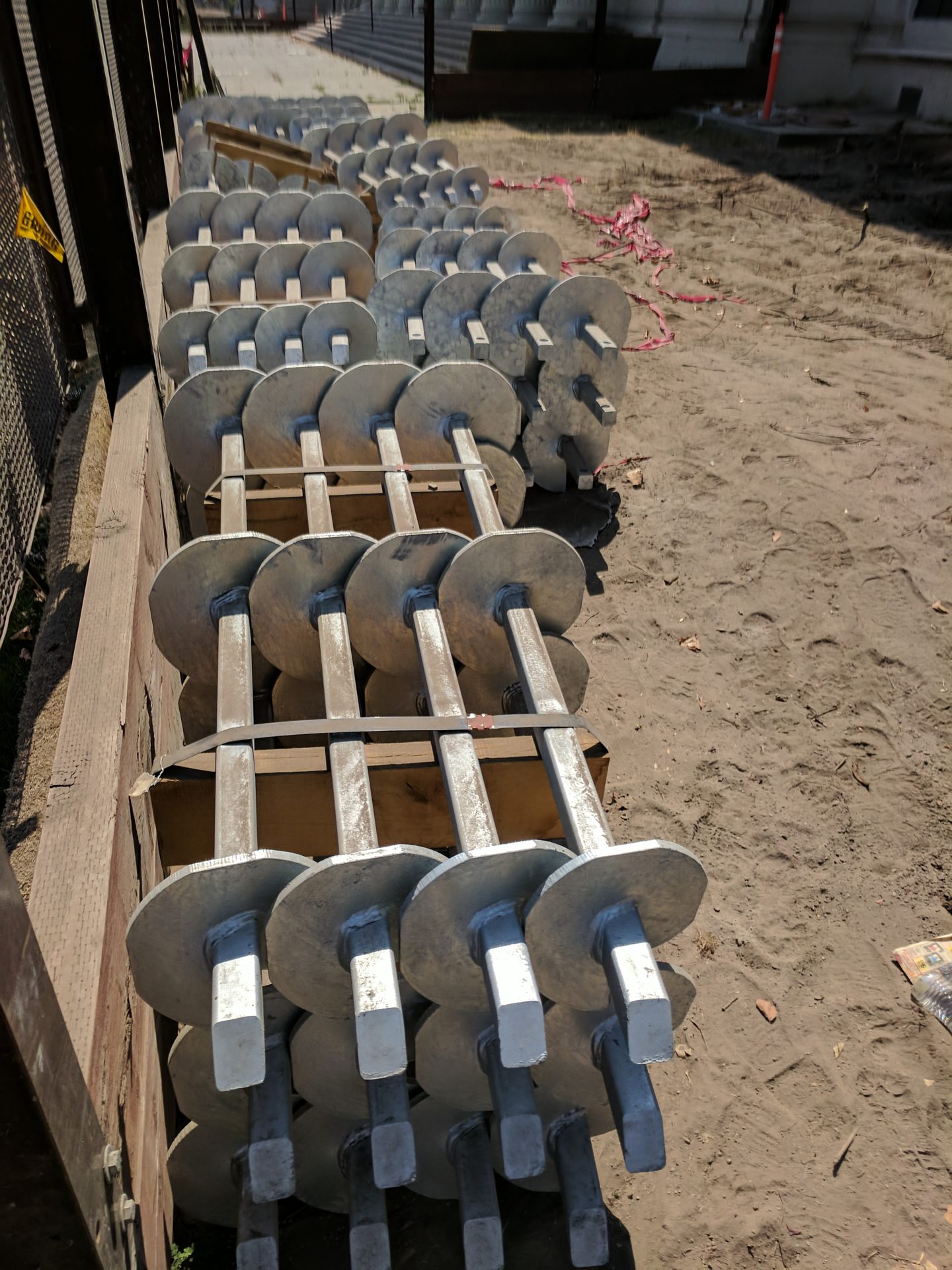
Argyriou / Wikimedia Commons, CC BY-SA 4.0
So the sort is simple:
- Sidewalk, driveway, patio, pool deck, garage floor, or an interior floor slab on a house whose foundation is stable: polyjacking works and it's the cheaper fix.
- A house foundation that's settling because the soil under it is moving: piers. Foam under a settling footing sinks right along with it.
- A settled house with a hollow, sagging slab in the middle: often both. Piers at the perimeter, foam to fill the void under the interior slab.
Polyjacking for a typical residential slab section often runs a few hundred to a few thousand dollars. Piers run $2,000 to $4,000 each, with most structural jobs landing between $8,000 and $30,000. Typical US ranges from industry cost guides (Angi/HomeGuide 2026). The contractor quotes the job.
This post covers what foam injection actually does, where it beats piers, where it's the wrong fix and a waste of money, and how to tell which one you're being sold.
Quick note on who's writing. Helical Pier Installation Directory is a matching service. We introduce you to a vetted local pier contractor, and they inspect and quote. If your problem is a slab that foam can fix, a good one will tell you. Free for homeowners. You can request a foundation match whenever you're ready.
What polyjacking actually is
A crew drills small holes, about the size of a dime, through the sunken slab. They push a nozzle through and inject a two-part polyurethane foam. The foam expands under the slab, fills any voids, and pushes the slab up. It hardens within minutes. The crew patches the holes and you can walk on it the same day.
It's the modern version of mudjacking, which pumps a cement slurry under the slab through bigger holes. Foam is lighter, cures faster, and lifts with more control. Mudjacking is cheaper and heavier, which matters in a minute.
Both are slab lifting. Both push up on the bottom of the concrete. Neither one changes what's under the foam.
What piers do
Piers are steel. A helical pier gets screwed into the ground until the torque reading shows it's in firm soil. A push pier gets driven down until it hits refusal. Either way, a bracket connects the pier to the foundation, and the weight of the house transfers off the moving soil and onto the pier.
Piers reach below the active zone, the top layer of soil that swells, shrinks, washes out, and compresses. That's the layer that caused the settlement. The pier stops caring about it. Service pages: helical pier installation and push pier installation.
The difference that decides everything
Say the soil under your slab has been drying and shrinking for years and a corner has dropped an inch.
Polyjacking fills the gap under that corner with foam and lifts it back up. The foam is now resting on the same soil that shrank. Next summer that soil shrinks again. The foam, and the slab on it, drop with it. You've paid to lift a slab onto ground you already know is moving.
Piers go down through that soil to something stable. The corner is now held up by steel sitting 15 feet down where the soil doesn't move. Next summer the top layer shrinks and the corner doesn't care.
That's why foam is a slab fix and piers are a foundation fix. Foam solves "there's a void under this concrete." Piers solve "the ground under this house is unreliable."
When polyjacking is the right call
Plenty of situations. Foam is excellent when the concrete sank and the soil underneath has finished moving or was never the real problem.
- Sidewalks, driveways, and patios. The classic use. Cheap, fast, done in an hour.
- Garage floors and porch slabs that aren't carrying the house.
- Pool decks.
- Interior floor slabs on a stable foundation. Some slab-on-grade houses have a perimeter grade beam that's fine and an interior slab section that's hollow underneath because of a washout or poor compaction during construction. Foam fills the void and lifts the floor.
- Voids from a repaired leak. A plumbing leak washes out soil under the slab, the leak gets fixed, and the void stays. Foam fills it.
- Steps and stoops that dropped away from the door.
The test: has the soil stopped moving, and is the slab carrying the house? If the soil is done and the slab is just a slab, foam.
When you need piers
- Settlement at a perimeter footing or grade beam. Stair-step cracks near a corner, doors racking, the classic pattern. That's the house sinking, and only piers reach the soil that will hold it.
- Anything in expansive clay that's still cycling. If the cracks open in drought and close in wet months, the soil is active. Foam on active clay is a temporary lift.
- A footing that's been dropping for years and keeps dropping. Compressible fill, deep soft soil, ongoing washout. Foam sinks with it.
- You need a warranty that the section stays put. Pier warranties promise stabilization for years or decades. Foam warranties on structural settlement are rare, and short when they exist.
The signs that mean settlement rather than a slab void are laid out in signs you need foundation piers.
When you need both
Very common on slab houses, and this is where a good contractor earns their money.
The perimeter has settled. Piers go in around the outside and lift the grade beam back up. But the interior slab was sitting on soil that dropped, and now that the edges are up, the middle of the slab is hanging over a void. Foam gets injected under the interior to fill that void and support the slab.
Piers hold the structure. Foam supports the floor. Two jobs, sometimes two contractors, often one company that does both. If you get a pier quote on a slab house, ask whether interior void filling is included or expected afterward. Details on slab leveling in general are in house leveling.
Polyjacking vs piers: cost
Typical US ranges from industry cost guides (Angi/HomeGuide 2026). Contractors quote the job.
| Fix | Typical cost | What you're paying for | |---|---|---| | Polyjacking a sidewalk, step, or small patio | A few hundred dollars | Foam, an hour of labor | | Polyjacking a driveway or garage floor | Low thousands | More foam, more slab area | | Polyjacking an interior floor slab section | Low thousands, sometimes more | Foam volume, interior access, drilling through flooring | | Mudjacking, same slabs | Often less than foam | Cement slurry, bigger holes, heavier material | | Helical or push piers | $2,000 to $4,000 per pier | Steel, excavation, brackets, torque-verified install, lift | | Full pier job on a house | $8,000 to $30,000 | Pier count, access, soil depth | | Piers plus interior void fill | Add low thousands to the pier job | Foam under the slab after the lift |
Foam is much cheaper. That's the whole reason it gets oversold for foundation problems. A homeowner with a $3,000 foam quote and a $15,000 pier quote for the same crack picks the foam, and a lot of them are back a year later with the same crack plus a new quote. Full pier pricing is in helical pier cost.
Longevity and warranty
Foam. Polyurethane itself is stable underground and doesn't wash out or break down like a cement slurry can. The foam lasts. Whether the lift lasts depends entirely on the soil under the foam. On stable soil, a foam lift is effectively permanent. On active soil, the slab re-settles with the ground. Warranties for foam typically cover the foam material and sometimes a re-lift within a short window, often a few years.
Piers. Galvanized steel driven to firm soil is expected to last the life of the house. Contractor warranties commonly run 10 years to lifetime and promise the piered section stays within a set tolerance. The fine print is in helical pier warranty.
Same theme as everything else in this post. Foam is a great material in the wrong place. Piers are the fix for the place.
Red flags on either side
Foam red flags:
- Foam quoted for stair-step cracks at a corner of the house. That's a footing, not a slab.
- Foam quoted with no elevation readings and no questions about drainage or leaks.
- Foam on a slab that sits over an unrepaired plumbing leak. The leak keeps washing out soil under the foam.
- Heavy mudjacking slurry under a slab on soft soil. Adding weight to soil that's already compressing speeds up the settling.
- Any promise that foam "stabilizes the foundation." It stabilizes the slab. Different thing.
Pier red flags:
- Piers quoted for a sunken driveway, patio, or garage floor. Overkill by a mile.
- Piers quoted for an interior slab sag on a house with a stable perimeter and no settlement pattern. A void fill may be all it needs.
- No mention of interior void fill on a slab house pier job where the middle of the floor has dropped.
The right answer usually comes out of an inspection with elevation readings, and the person doing it should be willing to say "you just need foam" or "foam won't hold here." That's the honest version of a foundation inspection.
Questions that sort it out
Ask whoever's quoting:
- Is the soil under this still moving, and how do you know? Elevation readings over time, crack photos, seasonal pattern.
- Is this slab carrying the house, or is it just a slab? Footing versus floor.
- What's under the foam once it cures? If the answer is "the same clay," ask how long the lift lasts.
- If I do foam and it re-settles, what does the warranty cover?
- If I do piers, does the interior slab need void fill afterward?
Anyone selling one product will lean toward it. In clay markets like the Dallas area, the contractors worth using carry both and explain why they chose one, the other, or both for your house.
FAQ
Is polyjacking a permanent fix?
For a slab on stable soil, yes. The foam doesn't break down and the slab stays where it was lifted. For a slab on soil that's still settling, shrinking, or washing out, the lift is temporary because the foam rests on that same soil. Piers are the permanent fix when the soil is the problem.
Can polyjacking fix foundation settlement?
No. It can lift a slab and fill voids under it. It can't reach the firm soil below the layer that's moving, so a settling footing sinks again and takes the foam with it. Foundation settlement needs piers.
Which is cheaper, polyjacking or piers?
Polyjacking, by a lot. A residential slab section often runs a few hundred to a few thousand dollars. Piers run $2,000 to $4,000 each and most structural jobs land between $8,000 and $30,000, per industry cost guides (Angi/HomeGuide 2026). Foam is cheaper because it fixes a smaller problem.
What's the difference between polyjacking and mudjacking?
Both lift slabs from underneath. Mudjacking pumps a cement slurry through larger holes. Polyjacking injects lightweight polyurethane foam through smaller holes, cures in minutes, and adds far less weight to the soil. Mudjacking is cheaper. Foam lifts more precisely and won't wash out.
Can you use foam and piers together?
Yes, and it's common on slab houses. Piers lift and hold the perimeter footing. Foam fills the void under the interior slab so the floor is supported after the lift. Ask whether your pier quote includes void fill or expects it afterward.
Does polyjacking work on expansive clay?
Only when the clay has stopped moving, which usually means the moisture around it has been managed and stabilized. On clay that still swells and shrinks each season, foam lifts the slab now and the slab moves with the clay later. Drainage and moisture control come first either way.
How long does polyjacking take?
Usually an hour or two for a driveway or patio, half a day for a larger interior slab area. The foam cures in minutes and you can use the slab the same day. Piers take one to three days for most house jobs.
Not sure whether your problem is a slab or the soil?
That's the right question, and it's the one an inspection answers. Elevation readings plus a look at the crack pattern tell you whether foam will hold or whether you need steel under the footing.
Request a foundation match and we'll introduce you to a vetted local pier contractor. If foam is the fix, a good one will tell you and you'll save money. If it's piers, you'll get a written quote with a pier layout. Free for you, no obligation.
The thing to remember when you're staring at a cheap foam quote and an expensive pier quote for the same crack: they're not competing fixes. They fix different problems. If you have the pier problem, the foam quote costs a few thousand dollars plus the pier job you'll still need next year.