Tue Sep 01 2026 00:00:00 GMT+0000 (Coordinated Universal Time)
Helical Piles for Decks and Additions: Cost, Pros, and Cons
Helical piles for decks and additions: how they compare to concrete footings, what they cost, when they fit new construction, and their limits. Free match.
Helical piles for decks and additions are the same steel screw piers used in foundation repair, put to work holding up something new instead of fixing something old. A crew screws each pile into the ground until the torque gauge says it's in firm soil, bolts a cap on top, and your deck beam or addition footing sits on that. No hole to dig, no concrete to pour, no waiting for it to cure. A deck's worth of piles usually goes in within a day and you can build on them the same afternoon.
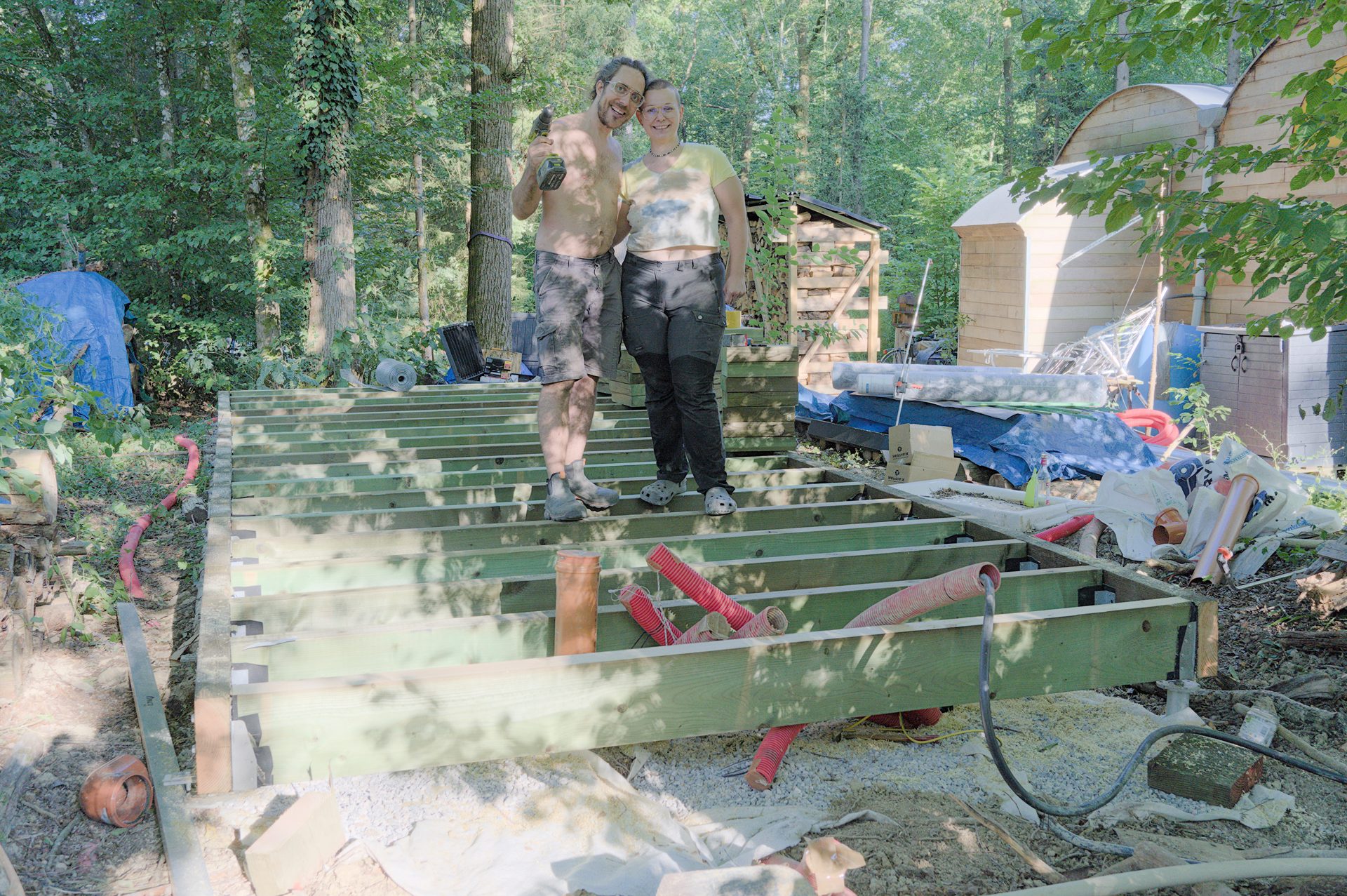
Trougnouf (Benoit Brummer) / Wikimedia Commons, CC BY 4.0
They cost more per support than a bag of concrete and a post hole. They cost less than most people expect once you count the digging, the inspection wait, and the cure time a concrete footing needs. Light-duty deck piles often run a few hundred dollars to around $1,000 each installed. Structural piles for additions and small buildings run roughly $1,000 to $3,000 each. Typical US ranges from industry cost guides (Angi/HomeGuide 2026), and the installer quotes the job.
This post covers how they work for new construction, how they stack up against concrete footings, what they cost for decks, additions, and whole houses, and when a concrete footing is still the better call.
Quick note on who's writing. Helical Pier Installation Directory is a matching service. We introduce you to a vetted local helical pier and pile contractor, and they quote and install. Free for homeowners. You can request a foundation match whenever you're ready.
Helical piles vs helical piers: same thing?
Mostly yes. The steel is the same: a galvanized shaft with one or more helix plates near the tip, screwed into the ground with a hydraulic drive head, verified by torque.
The naming splits by job:
- Helical pier usually means repair. The pile goes in next to an existing footing, a bracket grabs the footing, and the house gets lifted or stabilized.
- Helical pile usually means new construction. The pile goes in first, a cap goes on top, and the new structure gets built on it.
Engineers tend to say "pile" for both. Contractors tend to say "pier" for repair. Don't worry about the word. Worry about the torque log.
If you're here for a house that's already sinking, start with helical pier installation or helical piers vs push piers. This post is about building new.
How helical piles work for new construction
The install is faster than the repair version because there's nothing to dig around.
- Layout. The installer marks pile locations from the deck or addition plan, usually where the posts or footings would have gone.
- Drive. A hydraulic drive head, on a mini excavator or hand-held for tight spots, spins each pile into the ground. Extensions get added until the torque reading hits the target for the design load.
- Cut and cap. The pile is cut to height and a cap is bolted on. Caps come in a few styles: a flat plate, a U-bracket that holds a wood beam, a threaded adjustable top, or a plate that gets embedded in a concrete grade beam.
- Build. Beams or footings go straight onto the caps. Same day.
A deck with 8 to 12 piles is usually a half day to a day. An addition with a dozen structural piles is often one to two days. Compare that to concrete footings: dig, form, inspect, pour, wait several days to a week to load, and hope it doesn't rain in the middle.
Torque matters just as much here as in repair. Torque and holding capacity are related, so the installer knows each pile can carry its load before anything gets built on it. Ask for the log.
Helical pile vs concrete footing
Here's the honest side-by-side.
| | Helical piles | Concrete footings | |---|---|---| | Install time | Hours | Days, including cure time | | Weather | Any season, frozen ground included | Needs above-freezing temps and dry conditions to pour | | Digging | None to minimal | Holes or trenches at every footing | | Bad soil (clay, fill, sand, wet) | Pile goes down until it finds firm soil | Footing sits at fixed depth and relies on soil there | | Frost heave | Reaches below frost line easily | Must be dug below frost line, often 3 to 4 feet in cold climates | | Verification | Torque reading per pile | Inspector eyeballs the hole and the rebar | | Load right away | Yes | After curing, several days to a week | | Yard damage | Minimal | Spoil piles, ruts, wet concrete mess | | Cost per support | Higher upfront | Lower per footing in easy soil | | Removable | Yes, unscrew it | No | | Sloped or waterfront sites | Excellent | Hard and expensive |
The short version: helical piles win on speed, bad soil, sloped sites, cold climates, and tight access. Concrete wins on raw cost when the soil is good, the site is flat, and you're in no hurry.
Helical piles for decks
This is the most common new-construction use and where they've taken over fastest.
Why deck builders like them:
- No footing holes. No digging, no spoil, no wheelbarrows of concrete.
- No inspection delay. Many jurisdictions accept the torque log and a manufacturer's spec instead of a footing inspection. Go check yours.
- Adjustable caps. Get the beam dead level even when the ground isn't.
- Frost-proof. They go below the frost line without a 4-foot hole.
- Works next to a house. Light equipment fits where an excavator can't.
Typical deck piles are smaller diameter than structural piles. A common residential deck uses one pile per post, spaced like the posts would be, often 6 to 8 feet apart. Some manufacturers sell lighter piles that a certified installer drives with a hand-held unit in an hour or two for a whole deck.
Cost for a typical backyard deck: 6 to 12 piles at a few hundred to around $1,000 each installed, so often $2,500 to $10,000 for the supports. That's usually more than concrete footings would cost in easy soil, and it comes with a same-day build, no cure time, and a torque-verified support under every post.
Helical piles for additions and sunrooms
Additions are where the math starts to favor piles clearly.
An addition is heavier than a deck and it's attached to your house. That means it needs to move the same way the house moves, or the joint between them cracks. In expansive clay, this is the whole game. A concrete footing dug 2 feet down for the addition sits right in the active zone, swells and shrinks with the seasons, and pulls away from the house that's sitting on deeper piers or a stiffer slab.
Helical piles go below the active zone, same as repair piers. The addition ends up on stable ground and stays put relative to the house.
How it usually goes:
- Structural piles, larger diameter than deck piles, placed at the addition's perimeter and any interior bearing points.
- Caps embedded in a concrete grade beam, or a steel beam frame on adjustable caps.
- Slab or floor system built on top.
Sunrooms, screened porches, garage additions, and second-story additions that need new supports all follow the same pattern. Expect $1,000 to $3,000 per structural pile, with a small addition often needing 8 to 16 piles.
An engineer is usually involved here. The pile capacity has to match the load, and most cities want a stamped design for an attached structure. That's a good thing. It's the same design step that makes the torque target meaningful.
New construction helical piers for whole houses
Yes, entire houses get built on helical piles. It's common in a few situations:
- Bad soil. Deep clay, soft fill, peat, sand. Anywhere a conventional footing would need to be huge or would still be at risk.
- Sloped lots. Piles at different depths give you a level foundation on a hill without a massive retaining wall.
- Waterfront and flood zones. Elevated homes on piles.
- Cold climates. Below-frost-line support without deep excavation.
- Fast builds. Modular and prefab homes that need a foundation ready the day the boxes arrive.
A light wood-frame house is a natural fit, since helical piles get their strength from the soil rather than the structure's weight. Heavier masonry homes can go on piles too, with bigger shafts and more of them. An engineer sizes it. In clay country like the Dallas area, some builders spec helical piles on new homes specifically so the house starts its life below the active zone instead of getting piered 15 years later.
Cost, all together
Typical US ranges from industry cost guides (Angi/HomeGuide 2026). Installers quote the job.
| Use | Typical cost per pile installed | Typical count | |---|---|---| | Deck or small porch | A few hundred to around $1,000 | 6 to 12 | | Addition or sunroom | $1,000 to $3,000 | 8 to 16 | | Whole house, new construction | $1,000 to $3,000+ | 20 to 40+ | | Repair pier on an existing house | $2,000 to $4,000 | 3 to 12 |
Repair piers cost more per unit because of the excavation, the bracket, and the lift. New construction piles skip all three. What moves the price: pile size, depth to torque, access, and whether an engineer's design is required. Full repair pricing is in helical pier cost.
When concrete footings still win
Helical piles are great and they're still the wrong answer sometimes. Be honest about these:
- Good soil, flat lot, small deck, no rush. Concrete footings are cheaper and any competent deck builder can do them.
- Rocky ground. Helical piles can't screw through rock or big cobbles. Solid rock near the surface means concrete footings pinned to rock, or drilled piers.
- Very heavy loads with shallow bedrock. A footing on rock is hard to beat.
- No certified installer nearby. A helical pile driven without torque monitoring by someone who bought a drive head on the internet is worse than a well-dug concrete footing.
- Extremely tight budget. If the difference decides whether the deck gets built, concrete wins.
What to ask the installer
Same list whether it's a deck or a house:
- Will I get a torque log for every pile? Yes is the only acceptable answer.
- What's the design load per pile, and who set it? For an addition or house, an engineer. For a deck, the manufacturer's tables are usually fine.
- Is the steel galvanized? Bare steel in wet soil corrodes. Galvanized is standard for anything permanent.
- Are you a certified installer for this manufacturer? Certification means training and usually means the manufacturer's warranty applies.
- Does my city accept helical piles, and what do they want? Some want an engineer's letter. Some accept the torque log. Go check before you schedule.
- What cap are you using and how does the beam attach? Match it to the framing plan.
The install day itself is a lighter version of what's described in helical pier installation process, minus the digging.
FAQ
Are helical piles good for decks?
Yes, and they're now common for them. They go in within hours, need no digging or concrete, reach below the frost line easily, and each one is torque-verified. They cost more per support than concrete footings in easy soil and pay that back in speed and reliability, especially in clay or on sloped lots.
How much do helical piles cost for a deck?
Light-duty deck piles typically run a few hundred to around $1,000 each installed, so a 6 to 12 pile deck often lands between $2,500 and $10,000 for supports. Bigger structural piles for additions run $1,000 to $3,000 each. Typical US ranges from industry cost guides (Angi/HomeGuide 2026), and the installer quotes the job.
Helical pile vs concrete footing: which is better?
Depends on the site. Helical piles win on speed, bad soil, cold climates, slopes, and tight access, and each one is verified by torque. Concrete footings win on cost when the soil is good and the lot is flat. For anything attached to a house in expansive clay, piles that reach below the active zone are usually the safer choice.
Can you build a house on helical piles?
Yes. Whole homes go on helical piles in bad soil, on slopes, in flood zones, and in cold climates. An engineer sizes the piles to the loads. Light wood-frame homes are the easiest fit, and heavier homes use bigger shafts and more piles.
Do helical piles need an engineer?
For a deck, usually no. Manufacturer load tables and the torque log cover it in most places. For an addition, a sunroom attached to the house, or a new home, most cities want a stamped design. Check your local building department before scheduling.
How long do helical piles last?
Galvanized steel piles in normal soil are expected to last the life of the structure. Manufacturers commonly back the steel for decades. Corrosive soils and saltwater environments call for heavier galvanizing or extra protection, which the installer should flag during the site check.
Can helical piles be removed or reused?
Yes. They unscrew the same way they went in. That makes them popular for temporary structures, and it means a future owner can pull them if the deck comes down. Concrete footings stay in the ground forever.
Building something new and want it to stay put?
Decks, additions, and new homes all have the same first question: what's the ground going to do under it in five years? Helical piles are the answer that comes with a number attached to every support.
Request a foundation match and we'll introduce you to a vetted local helical pile contractor. They'll look at the site, tell you whether piles or footings make more sense, and quote the job in writing. Free for you, no obligation.
Last thing, and it's the reason additions are the sweet spot for piles: an addition on shallow concrete footings next to a house on a deeper foundation is a crack waiting to happen. The two move differently and the seam between them shows it. Piles below the active zone put the new part of the house on the same stable ground as the old part. That's cheaper than piering the addition later, and we see that repair job come through the directory more than you'd think.