Tue Sep 01 2026 00:00:00 GMT+0000 (Coordinated Universal Time)
Helical Pier Cost: What Homeowners Really Pay in 2026
Helical pier cost in plain numbers: $2,000 to $4,000 per pier, $8,000 to $30,000 per job, and the 6 things that move the price. Get a free local match.
Helical piers cost about $2,000 to $4,000 per pier installed in most of the US. A typical foundation repair uses 4 to 12 piers, so most jobs land between $8,000 and $30,000. Small corner fixes can come in under $10,000. Big jobs with interior piers, deep soil, or a full house lift can go past $30,000.
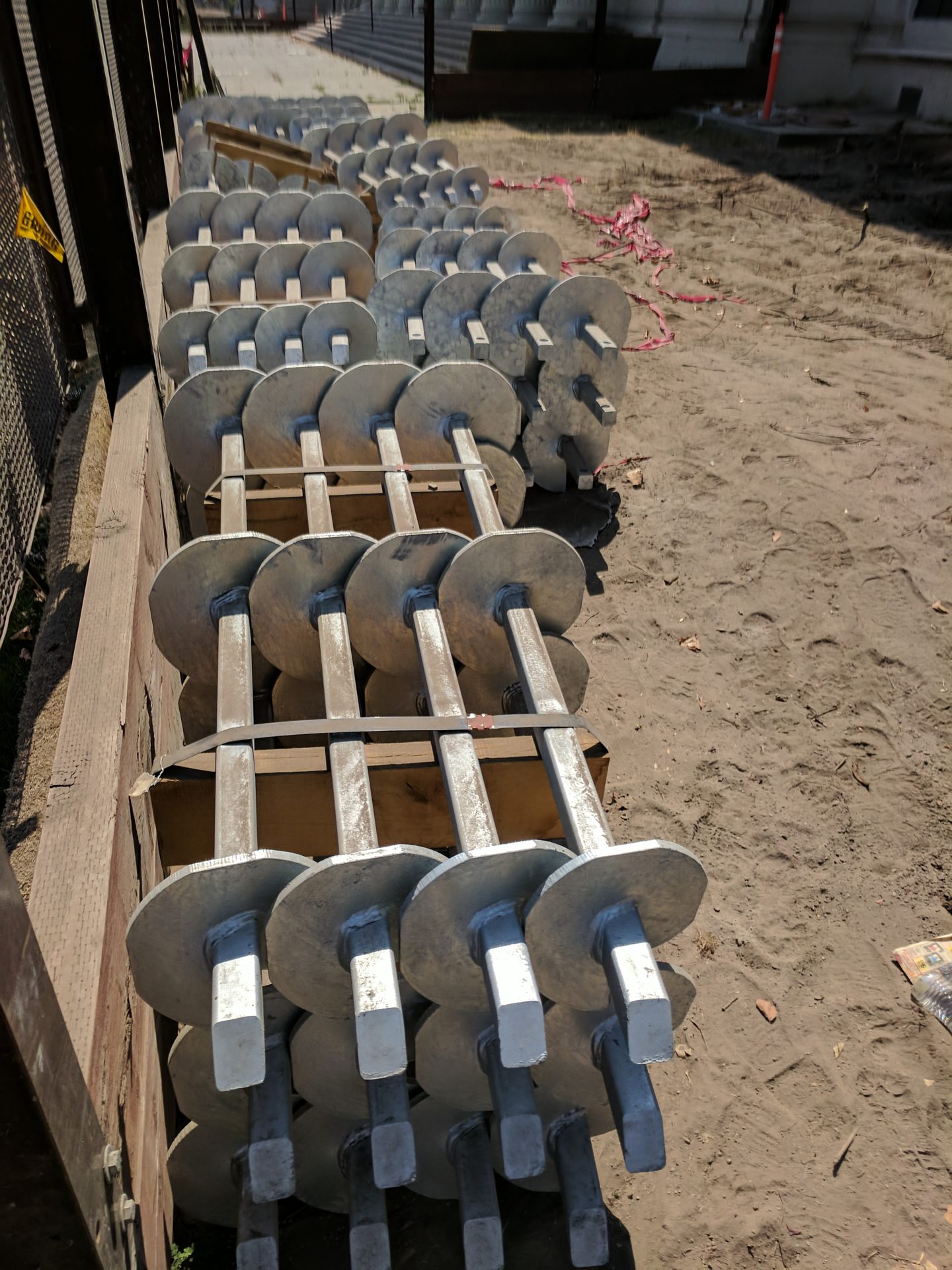
Argyriou / Wikimedia Commons, CC BY-SA 4.0
Those numbers line up with industry cost guides (Angi/HomeGuide 2026) and with the quotes we see come through the directory. Your contractor quotes the actual job.
That's the answer. Everything below is how to figure out where your house lands in that range, what moves the price, and how to tell a fair quote from a padded one.
One quick thing first. Helical Pier Installation Directory is a matching service. You tell us what's going on with your foundation, we introduce you to a vetted local pier contractor, and they come out and quote it. It's free for homeowners. You can request a foundation match whenever you're ready.
How much does a helical pier cost per pier?
Here's the per-pier picture:
| Pier situation | Typical installed cost per pier | |---|---| | Exterior pier, good access, average depth | $2,000 to $3,000 | | Exterior pier, tight access or extra depth | $3,000 to $4,000 | | Interior pier under a slab (cut concrete, haul dirt) | $3,500 to $5,000+ | | Light structure pier (porch, deck, addition) | $1,500 to $2,500 |
Why does the same steel screw range from $1,500 to $5,000? Because the pier is maybe a third of what you're paying for. The rest is labor, equipment, digging, and putting your yard back together.
What's included in the per-pier price?
A real quote bundles all of this into one number per pier:
- The pier itself. Galvanized steel shaft, helix plates, extension sections.
- The bracket that bolts to your footing.
- Digging the hole to expose the footing. Usually 2 to 4 feet deep at each pier spot.
- Driving the pier with a hydraulic head until it hits the target torque.
- Lifting or locking off the bracket.
- Backfilling the hole.
- Basic cleanup.
What's usually a separate line item:
- The inspection or engineer's report. Often a few hundred dollars, sometimes credited back if you hire them.
- Permits. Varies by city, often $100 to $500.
- Concrete cutting and patching for interior piers.
- Landscaping, sprinkler repair, or hardscape removal and replacement.
- Cosmetic repairs inside the house after a lift.
Ask for the line items. A good quote shows you exactly what the per-pier number covers so you can compare two contractors on the same thing. Here's what the service normally looks like: helical pier installation.
How many helical piers do I need?
This is the number that actually decides your bill. Pier count matters way more than the per-pier price.
The rule of thumb: one pier every 5 to 8 feet along the section of footing that's settling. Heavier houses and worse soil push that spacing closer to 5. Lighter houses and better soil let it stretch toward 8.
Rough counts for common problems:
- One settling corner. 3 to 5 piers. Around $8,000 to $15,000.
- One full side of the house. 6 to 10 piers. Around $15,000 to $30,000.
- Two sides or an L-shaped section. 10 to 16 piers. Around $25,000 to $45,000.
- Whole perimeter. 20 or more piers. This is rare and gets expensive fast. Also a sign you should get a second opinion, because whole-house settlement is unusual and sometimes the real problem is drainage or a single bad section.
- Porch, garage, or addition. 2 to 6 piers. Around $5,000 to $12,000.
Every quote should come with a drawing that shows where each pier goes. If the count feels high, ask the contractor to walk you through why each pier is there. Some will add a couple "just in case." That's your money.
The 6 things that move the price
1. Pier count. Covered above. Biggest lever by far.
2. Depth. Helical piers get driven until the torque reading says they're in firm soil. In some yards that's 10 feet. In others it's 30 or 40. Every extra section of pipe is more steel and more time. Contractors in deep-clay regions often build extra depth into the quote because they know what's down there.
3. Access. Can a skid steer get to the pier spots? Or does the crew have to hand-carry gear through a 3-foot gate, around an AC unit, and under a deck? Tight access can add 20 to 40 percent to labor. Interior piers under a slab are the extreme version. The crew cuts the concrete, digs by hand, hauls the dirt out through your house, and patches it after.
4. Lift vs stabilize. Locking the house where it sits is faster. Trying to raise it back to level takes more time, more care, and usually a second crew member watching cracks while the jacks go up. Expect a lift job to cost more than a straight stabilization on the same piers.
5. What's in the way. Concrete patios, driveways, decks, retaining walls, mature landscaping, sprinkler lines, gas lines. Anything that has to come out and go back in adds to the bill. Sometimes it's cheaper to move the pier a foot than to cut a patio.
6. Your local market. Labor rates and soil both vary. Sunbelt clay markets tend to see more piers per job because settlement is so common. Rural areas with fewer contractors sometimes see higher per-pier pricing because of drive time.
Helical pier cost vs push pier cost
Close to even per pier. Both usually run $2,000 to $4,000 installed.
Where they split:
- Push piers can get pricier when bedrock is deep, because they keep going until they hit refusal and every extra section costs money.
- Helical piers can get pricier in very soft soil, because the crew has to keep adding sections to find torque.
- Push piers need a heavy house to push against. On a light structure they can end up being the wrong tool, which means wasted money.
- Helical piers use smaller equipment, so they're often cheaper on tight-access jobs.
If a contractor only carries one type, they'll quote that type. That's fine as long as it fits your house. If you want the full comparison, read helical piers vs push piers. Details on the other option here: push pier installation.
Does homeowners insurance cover helical piers?
Almost never. Standard policies exclude settlement, soil movement, and "earth movement" in general. Foundation damage from a sudden covered event, like a burst pipe that washed out the soil, sometimes gets covered. Slow settlement over years does not.
So plan on paying for it yourself. Most pier contractors offer financing, often through a third-party lender, with terms in the 5 to 15 year range. Some homeowners use a HELOC. A few cities and states have low-interest home repair programs, and it's worth a quick search for yours.
How to get a fair quote
You need two things before you sign anything: an honest diagnosis and a second number.
Get the diagnosis first. A foundation inspection tells you whether you need piers at all, and if so how many and where. Some contractors inspect for free and quote on the spot. That's convenient. It's also a sales visit. An independent engineer's evaluation is often a few hundred dollars and it gives you a pier layout that any contractor can bid against. In clay-heavy markets like the ones on our Dallas page, an engineer's report is close to standard and some lenders require it.
Then get two quotes on the same layout. Two contractors bidding the same pier count and same locations gives you a real comparison. Two contractors each making up their own count gives you noise.
Red flags on a quote:
- No drawing showing pier locations
- A whole-house pier count for a problem that's clearly in one corner
- "Lifetime warranty" with no document to read
- Pressure to sign today for a discount
- A per-pier price with no explanation of what's included
- Piers quoted for a problem that sounds like drainage (wet crawlspace, water pooling at the house, cracks that open and close with the seasons)
Green flags:
- Torque logs promised for each pier
- Clear split between the stabilization warranty and the lift expectation
- Willingness to explain why each pier is placed where it is
- A line item for an engineer's report or a reason you don't need one
FAQ
How much does one helical pier cost?
About $2,000 to $4,000 installed for a typical exterior pier in the US, based on industry cost guides (Angi/HomeGuide 2026). Light-structure piers can be less. Interior piers under a slab can be more because of concrete cutting and hand digging. The contractor quotes the job.
How much does it cost to put piers under a house?
Most full jobs run $8,000 to $30,000. A single corner is usually on the low end. One full side of the house sits in the middle. Two sides or a big interior job can go past $30,000. Pier count drives the total more than anything else.
Why is the quote so much higher than the per-pier price times the count?
Look for the extras: engineer's report, permits, concrete cutting, landscaping removal, sprinkler repair, and any lift attempt. Those are normal, and they should be listed separately so you can see them. If the quote is one lump sum with no breakdown, ask for one.
Can I install helical piers myself to save money?
For a house, no. The equipment is hydraulic, the torque reading is what proves the pier will hold, and the bracket has to be sized to your footing. DIY helical piles exist for small decks and sheds. Under a house, a bad install is worse than no install because you'll think it's fixed.
Is a foundation inspection worth paying for?
Usually yes, and it's typically a few hundred dollars. An independent inspection tells you whether piers are the right fix and gives you a pier layout you can shop to multiple contractors. It often pays for itself by catching a padded pier count or by pointing you to a drainage fix instead of piers.
Do helical piers add value to a home?
They protect value more than they add it. A house with documented, warrantied pier work usually sells fine. A house with visible settlement and no repair scares buyers and tanks offers. Keep the warranty paperwork and the torque logs, and make sure the warranty transfers.
Are cheaper piers a bad sign?
Sometimes. A quote well under $2,000 per pier for a house is worth questioning. Ask what steel is being used, whether the install is torque-verified, and what the warranty covers. A low price with a thin warranty and no torque logs is how you end up paying twice.
Ready to find out what piers would actually cost for your house?
Every number in this post is a range because every house is different. The only way to get a real price is to have a qualified contractor look at your foundation, count the piers, and put it in writing.
Request a foundation match and we'll introduce you to a vetted local helical pier contractor. They'll inspect, give you a pier layout, and quote the job. Free for you, no obligation, and you can get a second quote to compare.
Piers get more expensive the longer a foundation keeps moving. Cracks widen, more of the footing settles, and the pier count climbs. Getting a number now, even if you wait to do the work, tells you what the clock is costing you.