Tue Sep 01 2026 00:00:00 GMT+0000 (Coordinated Universal Time)
Chimney Helical Piers: Fixing a Leaning or Separating Chimney
Chimney helical piers: why chimneys pull away from the house, how piers fix a leaning chimney, what it costs, and when to rebuild instead. Free match.
Chimney helical piers are steel screw piers driven under a chimney's footing to stop it sinking and, in most cases, pull it back tight against the house. A chimney is one of the most common pier jobs there is. It's tall, heavy, and narrow, and it usually sits on its own small footing that was poured shallower than the rest of the house. When the soil under that footing moves, the chimney tips away from the wall and a gap opens up.
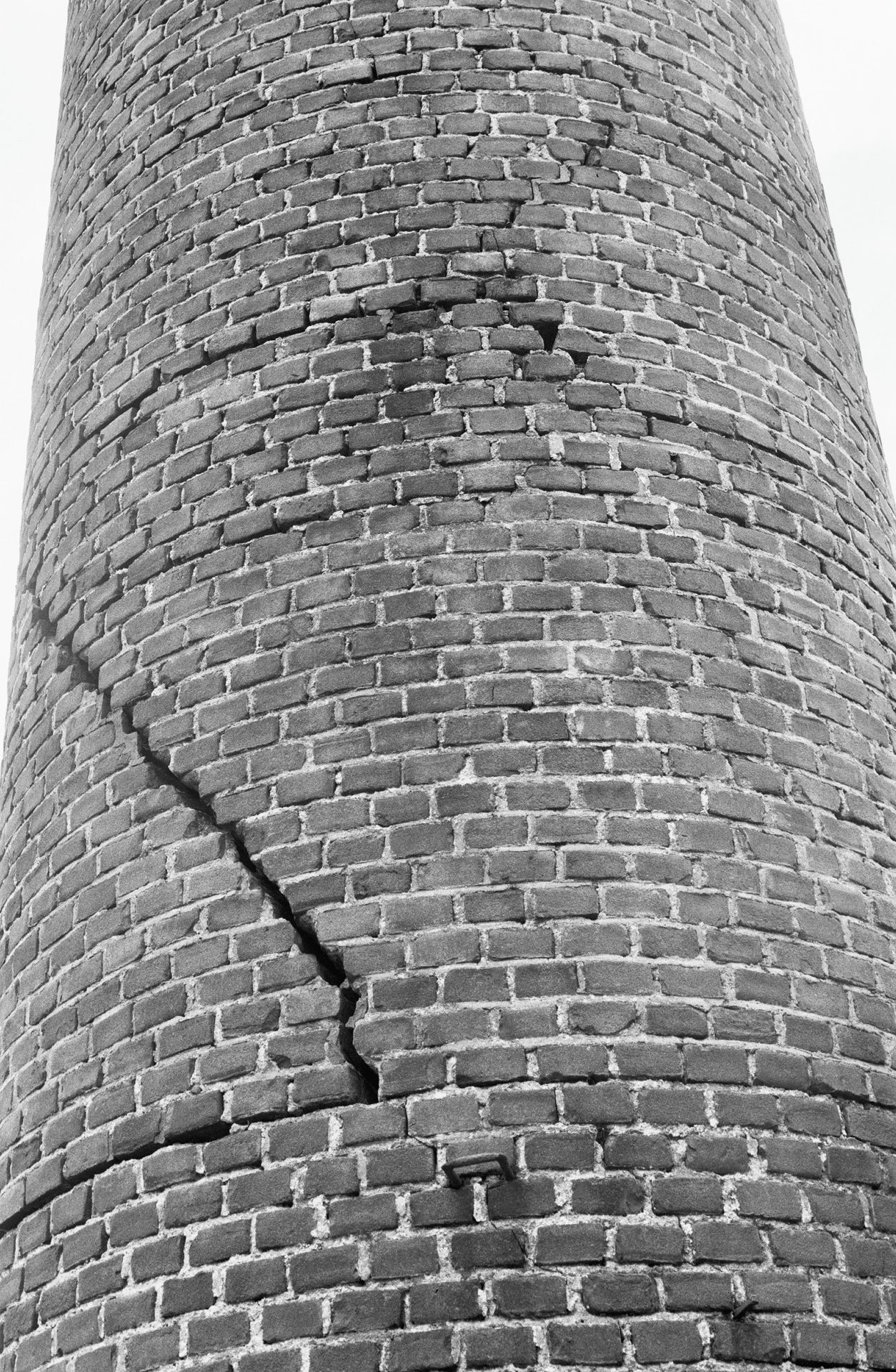
Gerard Dukker / Wikimedia Commons, CC BY-SA 4.0
The fix is usually two to four piers under the chimney footing, a lift to close the gap, and a bracket or tie-back to hold it. Most chimney pier jobs run $4,000 to $12,000, based on $2,000 to $4,000 per pier from industry cost guides (Angi/HomeGuide 2026). Access, soil depth, and how far it's leaning move the number. The contractor quotes the job.
This post covers why chimneys settle on their own, how to spot it, how the pier job works, what it costs, and when piers are the wrong call and the chimney should be rebuilt or removed.
Quick note on who's writing. Helical Pier Installation Directory is a matching service. We introduce you to a vetted local pier contractor, and they inspect and quote. Free for homeowners. You can request a foundation match whenever you're ready.
Why chimneys lean or pull away from the house
A masonry chimney can weigh several tons. All of that sits on a footing that's often just a few feet square. Builders frequently poured it separately from the house foundation, and on older homes it can be shallower and lighter than the main footing.
So you've got a very heavy, very narrow load on a small pad of concrete that isn't tied to the rest of the house. Three things go wrong from there:
- The soil under the footing compresses or washes out. A downspout near the chimney is the classic cause. So is soil that was never compacted well when the house was built.
- Expansive clay shrinks in drought. The chimney is on an exterior wall, often the side with the most sun, and the clay dries out fastest there. The footing drops with it.
- Roots. A big tree near the chimney pulls water out of that corner.
Because the chimney isn't tied to the house, it settles on its own. The house stays put, the chimney drops on its outer edge, and it tips outward. That's the gap you see between the brick and the siding.
It rarely falls. It almost always keeps leaning, a little more each year, until somebody fixes the footing.
Signs your chimney is settling
Walk outside and look at it from the side.
- A gap between the chimney and the house. Usually widest at the top. You can often see daylight through it. Sometimes someone has caulked or foamed it, which hides the problem and does nothing.
- A visible lean. Hold a level against the side, or sight down it from the ground. Any tilt away from the wall is settlement.
- Stair-step cracks in the chimney brick, especially near the base.
- Flashing pulling away at the roofline. Water starts getting in here, which is often how people first notice.
- Cracks in the firebox or hearth inside. The chimney and the firebox move together. Cracks here can mean the flue is compromised, which is a fire safety issue.
- A gap at the mantel or the interior chimney breast. The wall around the fireplace pulls away from the chimney.
- Water stains on the ceiling or wall near the chimney.
One or two of these is enough to get it looked at. A foundation inspection that includes the chimney will measure the lean and tell you whether the footing is still moving.
How chimney helical piers work
The job is a small version of a full foundation repair. Here's the sequence.
- Dig at the chimney footing. Usually two holes at the outside corners, sometimes one on each side, down to the bottom of the footing. Two to four feet deep.
- Bolt on the brackets. Steel brackets go under the footing at each pier spot.
- Drive the piers. A helical pier gets screwed in at each bracket until the torque reading hits target. That means the pier is in firm soil below the layer that's been moving. The crew logs the torque for each one.
- Lift. Hydraulic jacks at the brackets raise the outer edge of the footing. The chimney tips back toward the house and the gap closes. A good crew watches the mortar joints and the flashing the whole time and stops if the brick starts to crack.
- Lock off. The chimney's weight transfers to the piers.
- Tie it back. Many contractors add steel straps or brackets connecting the chimney to the house framing so the two move together from here on.
- Backfill and seal. Then re-caulk the joint, fix the flashing, and tuckpoint any cracked mortar.
Most chimney jobs are one day. Two if access is bad or the lean is severe.
Two piers is the minimum. Four is common on big chimneys or ones that have leaned a lot, because the crew wants control over the lift on both axes. The installer sizes it. The helical pier installation page covers the torque-verified install in more detail.
Helical piers vs push piers for a chimney
Both work. Here's why helical piers get used a lot on chimneys.
A chimney is heavy, which favors push piers, since they need weight to push against. Push piers do fine on a big masonry chimney.
But the footing is small, the pier spots are tight against the house, and the crew is usually working in a flower bed between the chimney and an AC unit. Helical piers can be driven with hand-held equipment in a spot like that. They also give the installer a torque number for each pier before the lift, which matters when you're tipping a tall, skinny stack of brick back toward the house.
On a small or lightweight chimney, or a framed chimney chase with a metal flue, helical piers are the only real option because there isn't enough weight for push piers to work.
The full comparison is in helical piers vs push piers. Push pier details are on push pier installation.
How much do chimney piers cost?
Typical US ranges from industry cost guides (Angi/HomeGuide 2026). The contractor quotes the job.
| Job | Typical cost | |---|---| | 2 piers, easy access, moderate lean | $4,000 to $7,000 | | 3 to 4 piers, tight access or severe lean | $7,000 to $12,000 | | Add tie-back straps and brackets | A few hundred to around $1,000 | | Add tuckpointing, flashing, caulk after lift | A few hundred to a couple thousand, depending on damage | | Chimney inspection (sweep or foundation contractor) | Often free to a few hundred dollars |
Chimney jobs are smaller than house jobs, and the per-pier price can run a bit higher because the crew is mobilizing for two to four piers instead of ten. Still cheaper than a rebuild in most cases. The general pricing breakdown is in helical pier cost.
Can a leaning chimney be straightened?
Usually, yes. Chimneys lift better than most parts of a house because they're a single stiff column with nothing attached to fight the movement. Crews commonly close the gap almost entirely.
Limits:
- Severe lean with cracked brick. If the chimney has already cracked across its width, lifting can open those cracks or shift the top section. The crew may stop short and tie it back where it is.
- Old settlement. A chimney that leaned 20 years ago and stopped has flashing, roofing, and interior finishes that adjusted to the lean. Bringing it fully back can tear those. Partial lift plus a tie-back is often the sane answer.
- Damaged footing. If the footing itself has broken, piers can't lift a broken pad evenly. That's a rebuild conversation.
Ask the contractor what lift they expect and get "stabilize, and lift up to X inches if the structure allows" in writing. Same rule as any pier job, and the warranty side of that is in helical pier warranty.
Pier it, rebuild it, or remove it?
This is the decision most homeowners skip straight past. Piers are the default, and they're usually right. Here's when they're wrong.
Pier it when:
- The brick is in decent shape and the chimney is leaning as one piece
- The footing is intact
- You use the fireplace, or the chimney is a big part of the house's look
- The lean is under a few inches at the top
Rebuild it when:
- The brick or mortar is badly deteriorated and would need major repair anyway
- The footing has cracked or broken
- The chimney has separated into sections
- The flue liner is shot and you'd be relining it regardless
A rebuild usually includes a new, properly sized footing, which solves the settlement for good. It costs more than piers on a chimney that's otherwise fine, and less than piers plus a big masonry repair on a chimney that's falling apart.
Remove it when:
- You never use the fireplace and don't care about the look
- The chimney is only serving a gas appliance that can be vented another way
- The masonry is in bad shape and the rebuild cost is close to the removal cost
Removal and patching the roof and wall is sometimes the cheapest option of all. It's rarely the first thing a pier contractor suggests, for obvious reasons.
Other chimney fixes that get confused with piers
A few things people hear about that don't fix a settling footing:
- Tuckpointing. Replacing cracked mortar. Cosmetic and weatherproofing. It does nothing about the lean and the cracks come back.
- Caulking or foaming the gap. Hides the problem, traps water. Skip it until the chimney's been piered or tied back.
- Tie straps alone. Steel straps bolting the chimney to the house without piers. They keep the chimney from falling over and put its weight onto the house wall. Fine as a stopgap on a small chimney. On a heavy one, it just moves the problem into the framing.
- Flashing repair. Necessary after the lift. Pointless before it, since the chimney keeps moving.
Do the piers first, then the cosmetic and weatherproofing work.
Is a leaning chimney dangerous?
Sometimes. Two separate risks:
- Falling. Rare, and it takes a big lean. A chimney that's opened a half-inch gap over ten years isn't coming down tomorrow. A chimney leaning several inches with cracked brick across its width is a different story and should be looked at quickly. Keep people and cars away from the fall zone until it's been checked.
- Fire and gas. More common and more serious. Movement can crack the flue liner or open joints in the chimney, letting heat, sparks, or carbon monoxide into the house framing. If your chimney has moved, have a chimney sweep do a flue inspection before you use the fireplace again, and go check with them on whether a camera inspection of the liner is warranted. A pier contractor fixes the footing. A sweep checks the flue. You want both.
In clay markets like the Dallas area, chimney settlement is common enough that most pier contractors do several a month. Ask how many chimney jobs they've done and what lift they usually get.
FAQ
How many piers does a chimney need?
Usually two to four. Two at the outside corners is the minimum. Larger chimneys and ones with a severe lean often get three or four so the crew can control the lift on both sides. The contractor sizes it from the chimney's weight and footing size.
How much does it cost to fix a leaning chimney with piers?
Most chimney pier jobs run $4,000 to $12,000, based on $2,000 to $4,000 per pier from industry cost guides (Angi/HomeGuide 2026). Add a few hundred to a couple thousand for tie-backs, tuckpointing, and flashing after the lift. The contractor quotes the job.
Can a leaning chimney be pushed back against the house?
In most cases, yes. Piers under the footing plus hydraulic jacks tip the chimney back toward the wall and close the gap. Chimneys that have cracked across their width or leaned for decades may only come partway back, with straps holding them in place.
Why is my chimney pulling away from my house?
Because it sits on its own footing that's usually smaller and shallower than the house foundation. When the soil under that footing compresses, washes out, or dries and shrinks, the chimney drops on its outer edge and tips away from the wall. Downspouts, drought, and tree roots are the common triggers.
Should I caulk the gap between my chimney and house?
Only after the chimney has been piered or tied back. Caulking a gap on a chimney that's still moving hides the lean and traps water against the framing. Fix the footing first, then seal the joint and repair the flashing.
Is it safe to use my fireplace if the chimney is leaning?
Get the flue checked first. Movement can crack the liner or open joints, which can let heat or carbon monoxide into the house. A chimney sweep's inspection is the right step before you light a fire, separate from the foundation repair.
Do chimney piers come with a warranty?
Usually the same stabilization warranty as any pier job: the piered footing stays put, and the contractor returns to adjust if it moves beyond a set tolerance. Masonry repair, flashing, and cosmetic work are typically covered separately or not at all. Read the document before you sign.
Got a gap opening up next to your chimney?
The good news is that this is one of the smaller, faster pier jobs there is, and it's one of the ones that lifts best. The bad news is that it keeps getting wider until someone fixes the footing.
Request a foundation match and we'll introduce you to a vetted local pier contractor who does chimney jobs. They'll measure the lean, tell you whether piers, a rebuild, or removal makes the most sense, and quote it in writing. Free for you, no obligation.
One thing most people don't hear until after the job: the chimney was probably the canary. It settled first because it's the heaviest thing on the smallest footing. If the soil on that side of the house is moving, the corner next to it is often next. Have the contractor take elevation readings on that whole side while they're out. Two piers now is cheaper than eight piers later.